

Why Florida Takes Unlicensed Plumbing So Seriously
In Florida, anyone paid to do plumbing work must hold a state plumbing contractor license, and most replacement or new work also needs a building permit. Skipping either one is a crime for the contractor and can cost the homeowner up to $5,000 in state penalties. Enforcement reaches every Florida county. DBPR investigators work statewide alongside local law enforcement, and undercover stings have targeted unlicensed contractors from Manatee and Lee Counties to right here in North Port.
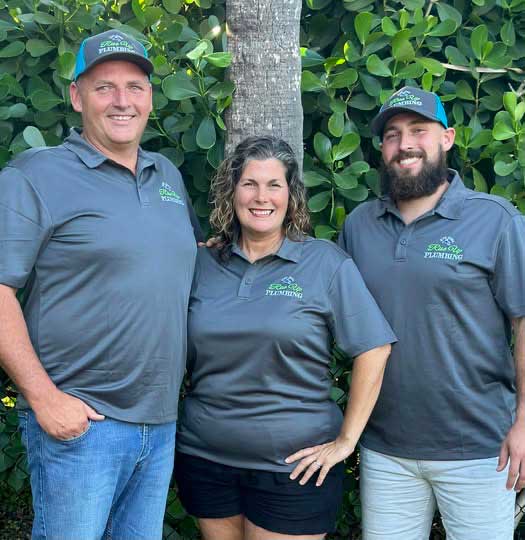
The Rise Up Plumbing team recently completed training through PHCC, the Plumbing-Heating-Cooling Contractors Association, which partners closely with the Manasota Air Conditioning Contractors Association (MACCA) on monthly contractor trainings. The session included licensing and enforcement officials who work alongside Florida’s contractor regulator, the Department of Business and Professional Regulation (DBPR). The message was clear: Florida is paying closer attention to who is doing plumbing work and whether permits are being pulled. Here is what that means for you as a homeowner.
Who Needs a License to Do Plumbing Work in Florida?
Anyone you pay to do plumbing work needs a Florida contractor license. The Florida Department of Business and Professional Regulation (DBPR) lists plumbing and air conditioning work among the services that require a state license, whether you pay in cash, goods, or trade.
Florida licenses come in two forms:
- State certified contractors can work anywhere in Florida.
- Registered contractors hold a local certificate of competency and may only work in the county or city where they are registered. Under Florida Statute 489.13, working outside that area counts as unlicensed activity.
A local business tax receipt is not a contractor license. Florida Statute 489.127 says so directly, and it also treats an inactive or suspended license the same as having no license at all.
Rise Up Plumbing’s residential plumbing services are performed by licensed professionals, so you never have to wonder whether the person in your home is legally allowed to be there.
Which Plumbing Jobs Need a Permit in Florida?
The simple rule: repairs usually do not need a permit, but replacing, relocating, or adding plumbing usually does. Section 105.2 of the Florida Building Code exempts a short list of plumbing work from permits. Everything else needs one.
| Type of work | Permit usually needed? |
|---|---|
| Stopping a leak in an existing pipe or drain | No |
| Clearing a clog or stoppage | No |
| Removing and resetting the same toilet | No |
| Replacing a section of concealed pipe with new material | Yes |
| Replacing or relocating valves, pipes, or fixtures | Yes |
| Water heater replacement | Yes |
| Whole-home repipe | Yes |
| Sewer line replacement | Yes |
The line between the two can surprise homeowners. A slab leak that is patched may not need a permit, but if the damaged pipe has to be cut out and replaced, the code treats that as new work. That applies to jobs like leak detection and repair, water heater replacement, and sewer line repair. Local rules can add requirements, so the North Port Building Division (941-429-7044) is the final word for work inside city limits.
In Florida, working without a required permit is itself a violation of state contracting law. It is listed right alongside contracting without a license in Florida Statute 489.127.
What Happens to Unlicensed Contractors in Florida?
A first offense is a first-degree misdemeanor, and a second offense is a third-degree felony. Those penalties come from Florida Statute 489.127, and they stack with fines and stop-work orders.
| Penalty | Who issues it | Maximum |
|---|---|---|
| First offense, unlicensed contracting | Criminal court | First-degree misdemeanor |
| Second offense | Criminal court | Third-degree felony |
| Any offense during a declared state of emergency | Criminal court | Third-degree felony, even on a first offense |
| Administrative fine | DBPR | Up to $10,000 (489.13) |
| Local code enforcement citation | County or city | Up to $2,000, and up to $2,500 per day if upheld at a hearing |
| Stop-work order | DBPR | All unlicensed work on the project |
Licensed contractors are not off the hook either. Florida law makes it a crime for a licensed contractor to let someone else use their license number or to pull a permit for a job they are not actually contracted to do. DBPR has also warned contractors that helping unlicensed operators get permits can put their own license at risk.
Staffing is another place where corners get cut. Some contractors win jobs with a low bid by paying crews as “subcontractors” instead of keeping them on payroll as W-2 employees. In Florida construction, that label does not hold up on its own. Under Florida Statute 440.02, a worker paid by a construction contractor as a subcontractor counts as the contractor’s employee for workers’ compensation unless the worker carries their own coverage or a valid state exemption. When a contractor misclassifies employees to avoid that coverage, the state can assess a penalty of up to $5,000 for each misclassified worker under Florida Statute 440.10. A subcontractor doing plumbing work also needs a license of their own, and a licensed contractor who knowingly hands work to an unlicensed sub can be disciplined under Florida Statute 489.129. For homeowners, an uninsured crew is exactly the liability risk covered below.
Enforcement is active. Florida uses undercover stings, where investigators pose as homeowners, call contractors who advertise licensed work, and make arrests when an unlicensed operator shows up to give an estimate. DBPR reports that it runs these stings regularly, including a 2023 Manatee County operation that led to 15 arrests. In 2022, the North Port Police Department ran its own sting, called Operation Con-Tractor, right here in town.
What Homeowners Risk by Hiring an Unlicensed Plumber
Homeowners can be penalized too. Under Florida Statute 455.228, DBPR can send a cease and desist notice to anyone who aids and abets unlicensed work by hiring the unlicensed person, and it can impose a penalty of up to $5,000 per incident.
The fine is only part of the cost:
- No contract protection. Contracts with unlicensed contractors cannot be enforced by the contractor, but that also means you may have little recourse if the work is bad or never finished.
- Work that has to be redone. Unpermitted work may need to be opened up, inspected, or replaced before you can sell or refinance.
- Insurance problems. If unpermitted plumbing fails and causes water damage, your insurer may question the claim.
- Liability. If an uninsured worker is hurt on your property, the cost can land on you.
The safest move is to confirm the license and ask who is pulling the permit before any work starts.
After a Hurricane: Why Licensing Matters Even More
Unlicensed contracting during a declared state of emergency is a felony in Florida, even on a first offense. Lawmakers wrote that rule because storm damage draws out-of-area operators who collect deposits and move on. In 2025, DBPR reported that a Lee County operation led to felony state of emergency charges against nine people.
Emergencies do not cancel the permit rules, but the Florida Building Code does allow for urgent repairs. When equipment must be replaced or repaired in an emergency, the work can start right away, and the permit application is due the next working business day. A licensed plumber handles that paperwork for you. An unlicensed one usually skips it.
If a storm leaves you with a burst pipe or a backed-up sewer, call a licensed emergency plumber rather than whoever knocks on your door first.
Can a Handyman Do Plumbing Work in Florida?
Only in very narrow cases. Florida’s so-called handyman exemption in Florida Statute 489.103 covers work of a casual, minor, or inconsequential nature when the total price for labor and materials is under $2,500. It does not apply if:
- The job is part of a larger project.
- The work is split into smaller invoices to stay under the limit.
- The person advertises as a contractor or claims to be qualified to do contracting.
In practice, DBPR treats paid plumbing work as licensed work. A handyman can hang shelves or patch drywall. Replacing a water heater, moving a drain line, or repiping a bathroom calls for a licensed plumber, regardless of what a remodeler or handyman tells you.
Florida Isn’t Alone: Georgia’s New Law
Other Southern states are tightening the rules too. Georgia’s Senate Bill 553, signed by Governor Brian Kemp on May 11, 2026, took effect July 1, 2026. According to Contractor Magazine, it bars anyone without a Georgia license from advertising plumbing, HVAC, electrical, or utility contracting services. PHCC of Georgia helped shape the bill.
Florida already has a similar rule on the books. Florida Statute 489.127 prohibits advertising as available to do contractor work without being registered or certified. That is why a flyer, yard sign, or online listing for plumbing work should always come with a license number you can check.
How to Verify a Plumber’s License in Florida
Checking a license takes about two minutes on MyFloridaLicense.com, DBPR’s official lookup site. Before you sign anything:
- Ask for the plumber’s license number in writing.
- Look it up on MyFloridaLicense.com and confirm the status reads current and active.
- Check that the license type covers plumbing. A certified license is valid in every Florida county, but a registered license only covers the county or city that issued it, so confirm it matches where the work will be done.
- Ask for proof of liability insurance and workers’ compensation coverage. Florida requires contractors to attest to workers’ compensation, liability, and property damage coverage to get or renew a license under Florida Statute 489.115, so a legitimate plumber should have the paperwork ready.
- Ask who will pull the permit. The answer should be the licensed contractor, not you.
If something seems off, you can report it to the DBPR Unlicensed Activity Hotline at (866) 532-1440. You can also contact your local police department or sheriff’s office. In North Port, police take tips at 941-429-7300.
Rise Up Plumbing is a state certified plumbing contractor (License #CFC1432759), fully insured, and handles the permit process on every job that needs one. Our team is also backflow certified through the TREEO Center at the University of Florida and medical gas certified through Florida Medical Gas, and every certification is current. Contact our team to schedule service with a plumber you can verify.
Frequently Asked Questions
Do I need a permit to replace a water heater in Florida?
Yes, in most cases. Replacing a water heater means replacing a regulated fixture, which falls outside Florida’s permit exemptions for simple repairs. Your plumber should pull the permit before or, in a true emergency, right after the work.
Can a homeowner be fined for hiring an unlicensed plumber in Florida?
Yes. DBPR can impose a penalty of up to $5,000 per incident on someone who aids and abets unlicensed activity by hiring an unlicensed person.
Is unlicensed contracting a felony in Florida?
A first offense is usually a first-degree misdemeanor. A second offense, or any offense during a declared state of emergency, is a third-degree felony.
Do plumbing repairs need a permit in Florida?
Most simple repairs do not. Stopping a leak, clearing a clog, and resetting a toilet are exempt. Replacing or relocating pipes, valves, or fixtures requires a permit.
How do I check if a plumber is licensed in Florida?
Search the plumber’s name or license number on MyFloridaLicense.com. The license should show as current and active and should cover plumbing work.