

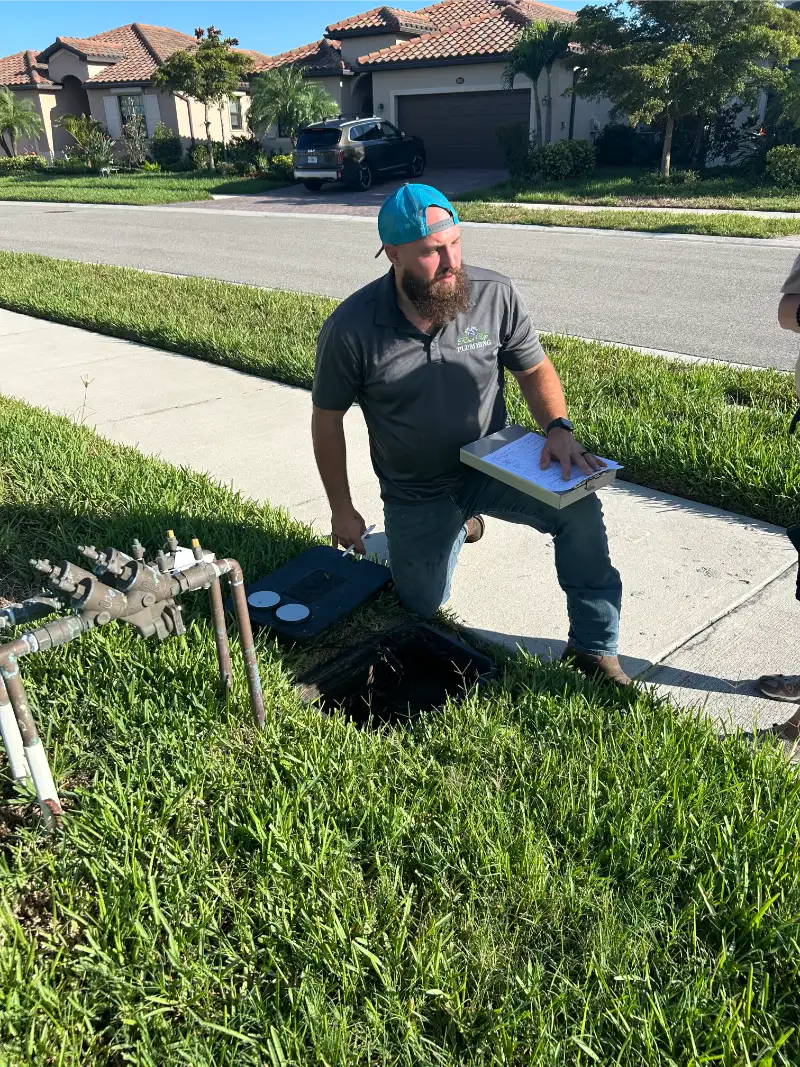
By the Rise Up Plumbing team, Florida Certified Plumbing Contractor, License #CFC1432759
The most common slab leak warning signs Florida homeowners notice are an unexplained jump in the water bill, a warm spot on a tile floor, the sound of running water when every fixture is off, and a drop in water pressure. Damp or warped flooring, a musty smell, and new cracks can follow. If you notice two or more, check your water meter and call a licensed plumber for leak detection.
Slab leaks are easy to miss because the pipe is buried under concrete and the water often soaks into the ground instead of showing up on the floor. This guide covers each warning sign, two simple checks you can do yourself today, and how plumbers confirm a slab leak without tearing up your floors.
What Is a Slab Leak, and Why Are Florida Homes at Risk?
A slab leak is a leak in a water line that runs beneath or through a home’s concrete foundation. Most homes in North Port, Port Charlotte, and across Southwest Florida are built slab-on-grade, which means the water supply lines run under the concrete rather than through a crawl space or basement you can inspect.
Under-slab pipes fail for a handful of reasons:
- Corrosion. Water chemistry can slowly thin copper pipe walls from the inside until a pinhole leak forms.
- Abrasion. Pipes that rub against concrete or gravel, especially hot water lines that expand and contract with use, can wear through over time.
- Age and installation. Older plumbing, poor original workmanship, or a kinked or damaged pipe during construction all raise the odds of a failure later.
- High water pressure. Pressure that runs higher than the system was designed for adds stress to every joint and weak spot.
Because the leak is hidden, the signs below are often the only early warning you get.
The 7 Slab Leak Warning Signs
These symptoms rarely show up all at once. One or two usually appear first and get blamed on something else, like a running toilet or Florida humidity. The pattern matters as much as any single sign.
| Warning sign | What it can mean | How urgent |
|---|---|---|
| Water bill jumps with no change in use | Water is escaping somewhere you can’t see | Check your meter right away |
| Warm spot on the floor | A hot water line under the slab may be leaking | High |
| Sound of running water with fixtures off | Water is moving through a pipe when it shouldn’t be | High |
| Sudden drop in water pressure | Water may be diverting through a leak | Moderate to high |
| Damp, warped, or lifting flooring | Moisture is migrating up through the slab | High |
| Musty odor or mold | Ongoing moisture in walls or flooring | Moderate to high |
| New cracks in floors, walls, or baseboards | Possible soil erosion under the slab, though cracks have other causes too | Have it inspected |
1. Your water bill went up and you can’t explain why
A slab leak runs around the clock, so even a small one adds up on your bill. If your usage jumped and you haven’t added irrigation, filled a pool, or had houseguests, the water is going somewhere. Compare the last few bills against the same months last year.
2. A warm spot on the floor
A warm patch on tile, vinyl plank, or concrete is one of the clearest slab leak clues. When a hot water line leaks under the slab, heat from the escaping water travels up through the concrete. You’ll usually feel it with bare feet in a kitchen, bathroom, or hallway, and pets sometimes start lying in the same spot.
3. You hear running water when nothing is on
A faint hiss or rush under the floor or behind a wall, when every faucet and appliance is off, deserves attention. According to the U.S. Department of Energy, water leaving a pipe under pressure makes a distinctive sound, with smaller leaks producing higher-frequency noise and larger leaks lower-frequency noise. It’s usually easiest to hear late at night when the house is quiet.
4. Water pressure suddenly drops
If your shower or kitchen faucet suddenly loses pressure, water may be escaping before it reaches the fixture. A pressure drop that affects the whole house and isn’t caused by a utility issue is worth investigating, especially alongside a higher bill.
5. Damp, warped, or lifting flooring
Moisture from a slab leak works its way upward. Watch for damp carpet with no spill, wood or laminate that cups or buckles, tile grout that stays dark, or baseboards that swell. In Florida these signs are easy to blame on humidity, so pay attention when they show up in just one area.
6. A musty smell or mold you can’t trace
Steady moisture under flooring or inside the bottom of walls creates the conditions mold needs, and Florida’s heat speeds that up. A musty odor in a room that looks dry is a reason to look further, not something to cover with air freshener.
7. New cracks in floors, walls, or baseboards
Water that runs under a slab for a long time can wash out supporting soil, and the structure above may shift and crack. This is usually a later-stage sign, and cracks can have other causes, so treat it as a reason to have the plumbing and the foundation checked rather than proof of a leak on its own.
Two Quick Checks You Can Do Today
The water meter test
The EPA’s WaterSense program recommends reading your water meter before and after a two-hour period when no water is being used. If the reading changes at all, you probably have a leak somewhere.
- Turn off every faucet, appliance, and the irrigation system, and make sure no toilets are running.
- Write down the meter reading, or note whether the small leak indicator on the dial is spinning.
- Wait two hours without using any water.
- Check the meter again. Any change points to a leak.
A meter test tells you water is escaping, not where. A running toilet or an irrigation leak can also move the meter, so rule those out before assuming the slab.
The hot side vs. cold side check
If your water heater has a shutoff valve on its cold water inlet, you can narrow things down. With all fixtures off, close that valve and watch the meter. If the meter stops moving, the leak is likely on the hot water side, which fits the warm-spot pattern of a slab leak. If it keeps moving, the leak is on the cold side or elsewhere. Open the valve again when you’re done.
How Plumbers Confirm a Slab Leak Without Tearing Up Floors
Finding a slab leak no longer means breaking up floors to search for it. A licensed plumber narrows it down with non-invasive tools before any concrete is opened:
- Pressure testing isolates hot and cold lines to confirm which part of the system is losing water.
- Acoustic listening equipment picks up the sound of water escaping under pressure, which the Department of Energy identifies as a standard leak detection method for building service lines.
- Thermal imaging can reveal temperature differences on the floor surface that line up with a leaking hot water line.
- Line tracing maps where the pipes actually run under the slab, so the leak location can be matched to the pipe route.
Pinpointing the leak first keeps the repair as small as possible. It also gives you a written diagnosis, which matters if you plan to file an insurance claim. Learn more about our leak detection and repair service.
What to Do If You Think You Have a Slab Leak
- Run the meter test to confirm water is being lost.
- If water is surfacing, shut off the main water valve to limit damage.
- Photograph what you see, including warm spots, damp flooring, and your recent water bills.
- Call a licensed plumber for leak detection before anyone starts breaking concrete.
- Contact your insurance company promptly once a leak is confirmed, because many policies limit coverage for leaks that continue over time.
If water is actively surfacing through your floor or the damage is spreading, treat it as an emergency. Our 24/7 emergency plumbing team can help stop the damage quickly.
Get a Clear Answer From a Local Plumber
Rise Up Plumbing brings more than 45 years of combined trade experience to leak detection and repair for homeowners in North Port, Port Charlotte, Punta Gorda, Englewood, Venice, and Sarasota. If you’ve noticed any of these warning signs, call (941) 310-3235 or schedule leak detection online.
Frequently Asked Questions
How do I know if I have a slab leak or just a high water bill?
Start with the meter test: read your water meter, use no water for two hours, and read it again. If it changed, water is escaping somewhere. A slab leak usually comes with other clues too, such as a warm spot on the floor, the sound of running water, or damp flooring. Rule out running toilets and irrigation, then have a plumber confirm the source.
How long can a slab leak go undetected?
A slab leak can go unnoticed for weeks or months because the water often drains into the ground under the foundation instead of pooling where you can see it. Seasonal homes are especially vulnerable since nobody is there to notice early signs. Checking your water bill and meter regularly, and right after returning from time away, is the best way to catch one early.
Is a slab leak an emergency?
It should be handled promptly. Water escaping under a foundation can erode supporting soil, damage flooring, and feed mold, and longer leaks can also complicate insurance coverage. If water is surfacing through the floor or damage is spreading, shut off the main water valve and call a plumber right away. Otherwise, schedule leak detection as soon as you can.
Can a slab leak be repaired without digging up my floors?
Often, yes. Depending on where the leak is and the condition of the pipe, a plumber may reroute the water line through walls or the attic instead of going through the slab. When the slab does need to be opened, accurate leak detection keeps the opening small and targeted. The right method depends on what the diagnosis finds.
Does a warm spot on the floor always mean a slab leak?
Not always, but it’s one of the strongest signs, especially when it shows up alongside a higher water bill or a meter that moves when no water is in use. Sunlight through a window can also warm a spot of flooring. If the warm area stays put day and night, have it checked.