

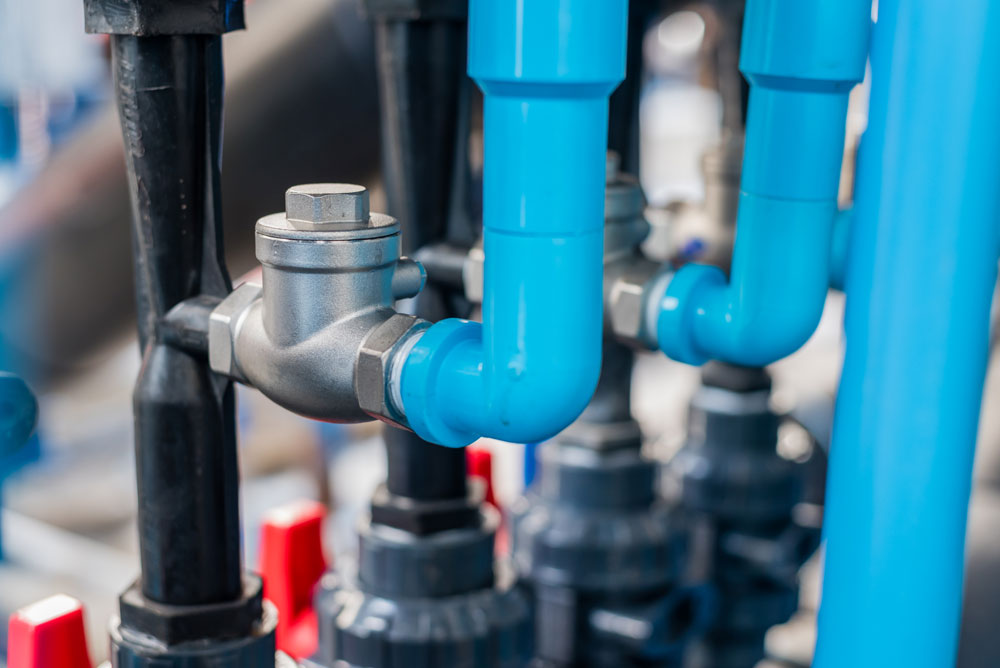
A whole-home water filtration system treats all the water entering your house at the main supply line, so every faucet, shower, and appliance gets filtered water. In North Port, it makes the most sense for homes on private wells with iron or sulfur, and for city-water homes that want to reduce chlorine taste, sediment, and scale on fixtures and appliances.
Not every home needs one. North Port city water meets federal drinking water standards, and some households are better served by a single under-sink system. This guide walks through what each type of equipment does, what it costs, and how to decide what fits your water.
Water Softeners vs. Filters vs. Reverse Osmosis: What Is the Difference?
These three terms get used interchangeably, but each solves a different problem. Buying the wrong one is the most common mistake we see.
| System | What it does | Where it installs | Best for |
|---|---|---|---|
| Whole-home filter | Reduces chlorine, sediment, odors, and some chemicals using carbon and other media | Main supply line | Taste, odor, and sediment throughout the house |
| Water softener | Removes calcium and magnesium through ion exchange | Main supply line | Scale on fixtures, pipes, and water heaters |
| Reverse osmosis (RO) | Forces water through a membrane to remove most dissolved solids | Usually one faucet, often the kitchen sink | The highest quality drinking and cooking water |
| Well treatment system | Removes iron and hydrogen sulfide by oxidation or catalytic media | Well line, before other equipment | Rotten egg smell and orange staining |
One point often missed: point-of-use RO sends some water down the drain as it works. The EPA notes that typical systems waste five gallons or more for every gallon of treated water, while WaterSense labeled RO systems send 2.3 gallons or less. If you choose RO, look for the label.
What Does Whole-Home Filtration Remove?
It depends on the media inside the tanks, which is why a water test should come before any purchase. Common stages include:
- Sediment filtration to catch sand, rust flakes, and grit that wear out valves and clog aerators.
- Activated carbon to reduce chlorine taste and odor, along with many organic chemicals. If your utility disinfects with chloramine rather than chlorine, you need catalytic carbon, so ask before buying.
- Iron and sulfur treatment for well water, using oxidation or specialty media.
- Ion exchange when the goal is also to soften water or target specific contaminants.
What whole-home filtration does not do on its own is soften water. If scale is your main complaint, you need a softener, either alone or paired with a filter.
What Does Whole-Home Water Filtration Cost in North Port?
Installed costs vary with system size, media type, and how much plumbing work the installation requires. Based on typical national pricing:
- Under-sink RO or carbon system: a few hundred dollars installed, plus periodic filter changes.
- Whole-home carbon and sediment system: often $1,000 to $4,000 installed.
- Well systems for iron and sulfur: typically more, because they need specialty media, and sometimes an injection or aeration stage.
- Water softener: priced separately, and often installed alongside a filter.
The return shows up in fewer replacement cartridges at individual faucets, less scale on fixtures, less soap and cleaning product use, and less mineral stress on water heaters and appliances. For a well-water home with sulfur or iron, the benefit is usually obvious within days. For a city-water home with only mild taste concerns, a lower-cost under-sink system may deliver most of what you want.
The Best Options for North Port’s Water
North Port homes fall into two groups, and the right answer is different for each.
City water customers. North Port runs its own utility. According to the City of North Port Utilities Department, its main sources are surface water from the Myakkahatchee Creek and six intermediate groundwater wells, supplemented by treated water purchased from the Peace River Manasota Regional Water Supply Authority. The groundwater is treated by reverse osmosis and blended with treated creek water, which keeps mineral levels moderate. Most city-water homes that want filtration are looking to reduce chlorine taste and odor, sediment, or light scale. A carbon system, a softener, or an under-sink RO unit usually covers it, and our whole-home water filtration and reverse osmosis services start with a water quality test so you only pay for what your water needs. Check the city’s latest Consumer Confidence Report for current water quality data.
Private well owners. Well water is untreated and varies a lot from one property to the next. Iron, hydrogen sulfide, sediment, and hardness are common in this area. Start with a lab test. The Florida Department of Health in Sarasota County recommends testing wells for bacteria and nitrate at least once a year, and a separate test for iron, sulfur, hardness, and pH shows what treatment you need. Your well equipment matters too. Sputtering faucets, sand or sediment in the water, and pressure that surges and drops can come from a worn pump or waterlogged pressure tank rather than the water itself, so our well pump services team can check the system at the same visit.
What to Expect During Installation
A professional installation follows a predictable process:
- Water testing so the system and media match your actual water, not a guess.
- Sizing based on your household’s peak flow. An undersized system causes noticeable pressure drops when the shower and dishwasher run at the same time.
- Placement in a garage or utility area, protected from direct sun and easy to reach for service.
- Bypass valve installation so the system can be serviced without shutting off water to the whole house.
- Drain connection for backwashing filters and softeners.
- Startup and walkthrough so you know how to check the system and when maintenance is due.
Most standard installations take a few hours. Well systems with multiple stages can take longer.
Pairing Filtration With a Water Softener
Filters and softeners work well together because they solve different problems. The usual order at the main line is sediment filter first, then carbon or well treatment, then the softener, so the softener resin is protected from chlorine and debris. Installing both at once is simpler and less expensive than adding one later.
A softener also helps your water heater. Less scale means less sediment in the tank and less buildup in tankless heat exchangers. If your heater is already struggling, our water heater services team can assess it while planning your treatment system.
Frequently Asked Questions About Whole-Home Water Filtration in North Port
Is North Port tap water safe to drink?
Yes. North Port’s city water meets federal drinking water standards, and the city reports its results each year in its Consumer Confidence Report. Filtration is usually about taste, odor, scale, and appliance protection rather than safety. Private wells are different and should be tested every year.
Can a whole-home filter remove PFAS?
The EPA has found that activated carbon, ion exchange, and reverse osmosis systems can greatly reduce PFAS. Its guidance focuses on point-of-use filters certified to NSF/ANSI 53 or NSF/ANSI 58, and it notes that as of April 2024 those certifications do not yet confirm removal down to the new federal limits. If PFAS is your main concern, a certified under-sink system is the most proven option. See the EPA’s guidance on PFAS filters.
How often do whole-home filters need maintenance?
Sediment cartridges often need changing every few months to a year, depending on how much sediment your water carries. Backwashing carbon tanks can go several years before the media needs replacing. Your installer should give you a schedule based on your water test and system.
Will a standard filter fix the rotten egg smell in my well water?
Usually not. That smell comes from hydrogen sulfide gas, which basic sediment and carbon filters are not built to handle at typical well levels. It needs an oxidation system or catalytic carbon sized to the concentration in your water, so test first.
Get Honest Water Filtration Advice From Rise Up Plumbing
Whole-home filtration is a good investment when it matches your water and a waste of money when it does not. Test first, then choose the equipment.
Rise Up Plumbing brings more than 45 years of combined trade experience to homes across North Port, Englewood, Port Charlotte, and Punta Gorda. We will test your water, explain the results in plain language, and recommend only what your home needs. Call (941) 310-3235 or contact us online to schedule a water test. For other work around the house, see our full range of residential plumbing services in North Port.