
If you have discovered tree roots in sewer line pipes at your North Port home, you are not alone, and you are definitely not the first homeowner to wonder how something as peaceful as a tree turned into a plumbing villain. Tree roots are one of the most common causes of damage leading to sewer line repair in Florida, especially in areas like North Port, where warm weather, sandy soil, mature landscaping, and year-round plant growth create the perfect conditions for roots to spread aggressively. While trees may look beautiful above ground, their underground root systems can quietly search, squeeze, invade, and damage sewer lines long before you notice the warning signs.
For many homeowners, sewer line trouble starts subtly. A toilet gurgles. A shower drains more slowly than usual. A kitchen sink backs up once, then works fine again. It is tempting to blame a clog, pour in a drain cleaner, and move on. Unfortunately, when tree roots are involved, the problem usually gets worse, not better. Roots do not politely knock on your sewer line and ask permission. They find moisture, enter through tiny openings, and grow until they create a blockage or break the pipe entirely.
In North Port, this issue deserves serious attention. Sewer lines are buried, hidden, and easy to forget until something goes wrong. But when roots invade, they can cause costly repairs, unpleasant sewage backups, yard damage, and major disruption to your home. Understanding why tree roots target sewer lines, how the damage happens, and what you should do about it can help you protect your property before a small root problem turns into a full plumbing disaster.
Why Tree Roots Are So Attracted to Sewer Lines
Tree roots have one main job: to find water and nutrients. Sewer lines happen to provide both. Even a small leak, loose joint, crack, or weak pipe connection can release moisture into the surrounding soil. To a tree root, that moisture is basically a flashing neon sign that says, “Free buffet this way.”
Once roots sense the water vapor escaping from a sewer line, they grow toward it. This is not random. Roots naturally follow moisture gradients in the soil. In a dry or sandy environment, a sewer pipe can become one of the most attractive sources of moisture underground.
Sewer lines may also contain organic matter and nutrients that encourage root growth. Once a root reaches a vulnerable spot in the pipe, it can begin to enter. At first, the root may be as thin as a hair. Over time, it thickens, branches out, and creates a net inside the pipe. That root mass catches grease, toilet paper, wipes, debris, and anything else flowing through the sewer line.
The result is not pretty. It is also not something you want to discover during a holiday weekend with guests in the house.
Why North Port Homes Are Especially Vulnerable
North Port has several conditions that can make tree root sewer line problems more likely. Florida’s climate allows plants and trees to grow throughout much of the year. Unlike colder regions where growth slows dramatically for long periods, roots in Southwest Florida can stay active and persistent.
North Port also has many properties with established trees, palms, shrubs, and ornamental landscaping. Homeowners often plant trees for shade, curb appeal, privacy, and comfort. That is understandable. Nobody wants a yard that looks like a parking lot with grass. But when trees are planted too close to sewer lines, the risk of root intrusion rises.
Several local factors can contribute to root-related sewer line problems:
- Warm weather: Roots can continue growing for much of the year.
- Sandy soil: Water can move through soil quickly, encouraging roots to search for reliable moisture sources.
- Mature landscaping: Older trees often have wider, stronger root systems.
- Aging pipes: Older sewer lines may have cracks, corrosion, weak joints, or deteriorated materials.
- Heavy rain patterns: Frequent moisture changes can shift soil and stress underground pipes.
- Fast-growing vegetation: Some trees and shrubs develop aggressive root systems that spread quickly.
This does not mean every tree in North Port is out to destroy your plumbing. Your oak tree is not plotting against you during the night. But roots are persistent, and sewer lines are vulnerable when they are cracked, loose, aging, or poorly installed.
How Tree Roots Get Into Sewer Lines
Tree roots usually do not break into a perfectly sealed, brand-new sewer line without help. They typically enter through existing weaknesses. These weak points may be tiny, but roots do not need much space to start causing trouble.
Common entry points include:
- Small cracks in the pipe
- Loose pipe joints
- Separated pipe sections
- Deteriorated clay, cast iron, or older pipe materials
- Poorly sealed connections
- Damage from soil movement
- Previous improper repairs
- Pipe bellies where water collects
Once inside, roots grow rapidly because they have access to moisture and nutrients. As the root mass expands, it reduces the open space inside the pipe. Wastewater flow slows down. Debris begins to collect. Eventually, the line may clog completely.
In some cases, roots can exert pressure on the pipe from the outside as well. Large roots may wrap around pipes, shift them, crush them, or worsen existing cracks. This can lead to leaks, collapsed sections, and recurring backups.
Warning Signs of Tree Roots in a Sewer Line
The biggest mistake homeowners make is ignoring early warning signs. Sewer line problems rarely fix themselves. In fact, they tend to become more expensive with time. A slow drain today could become a sewage backup tomorrow.
Watch for these common signs of tree roots in your sewer line:
- Multiple slow drains: If several drains are slow at once, the issue may be in the main sewer line.
- Gurgling toilets: Strange bubbling sounds can indicate blocked or restricted wastewater flow.
- Frequent clogs: Recurring clogs, especially after professional clearing, may point to roots.
- Sewage odors: Bad smells near drains, toilets, or outside can indicate sewer line trouble.
- Water backing up: Wastewater may come up through tubs, showers, or floor drains.
- Wet spots in the yard: Unexplained soggy patches may mean a leaking sewer line.
- Extra green grass: A suspiciously lush area of lawn could be feeding on wastewater.
- Toilet problems: Toilets may flush weakly, overflow, or drain slowly.
- Sink or tub backups when using other fixtures: For example, water backing up in a shower when the washing machine drains.
One clog is not always a sewer emergency. But if your home keeps having drainage problems, it is time to stop treating symptoms and find the source.
Why DIY Drain Cleaning Usually Fails
When drains slow down, many homeowners reach for chemical drain cleaners. It seems easy. Pour, wait, hope, repeat. Unfortunately, chemical cleaners are not a real solution for tree roots. They may clear a little buildup, but they cannot remove a root invasion from your sewer line.
Worse, harsh chemicals can damage pipes, especially older materials. They can also create safety hazards and may make professional repairs more complicated. If the line is already cracked or weakened, chemical cleaners will not address the structural problem that allowed roots to enter in the first place.
Store-bought drain snakes can also fall short. They may punch a temporary hole through the blockage, allowing water to drain for a short period. But roots often remain in the pipe and quickly catch more debris. That is why many root-related sewer issues keep coming back.
Think of it like trimming one leaf off a weed and expecting the whole plant to disappear. Satisfying for about twelve seconds, but not exactly a long-term strategy.
The Importance of Sewer Camera Inspections
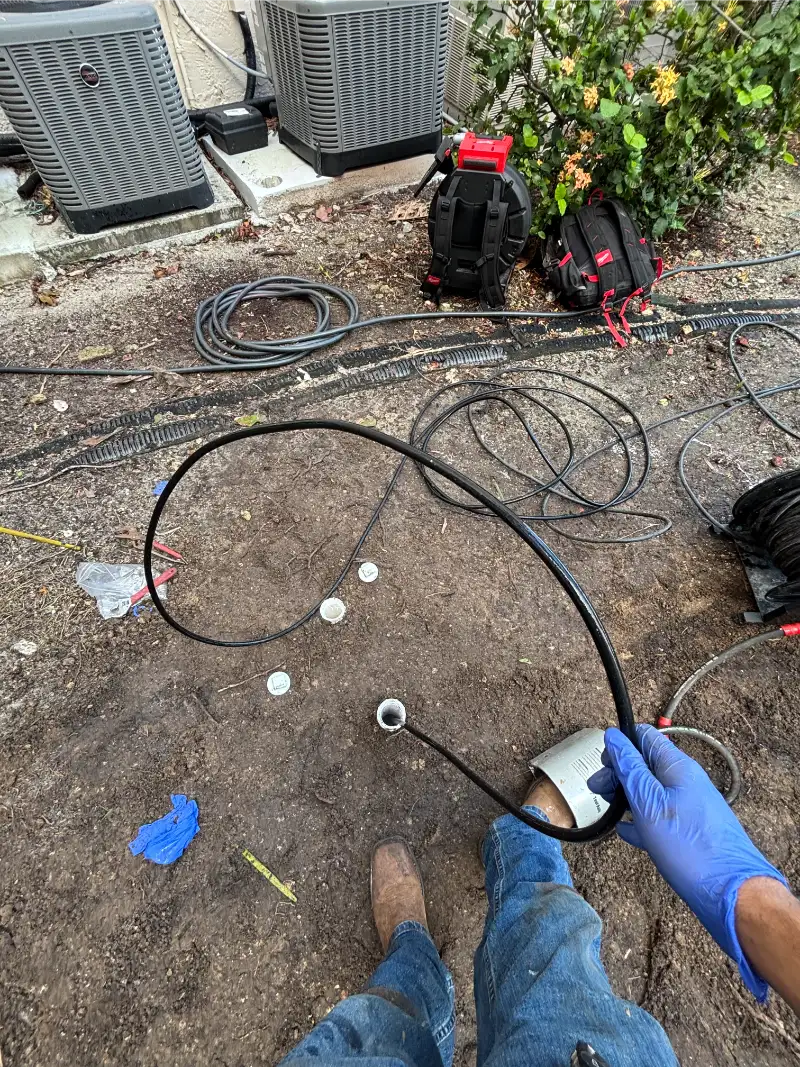
A sewer camera inspection is one of the best ways to confirm whether tree roots are damaging your sewer line. Instead of guessing, a licensed plumber can insert a specialized waterproof camera into the line and inspect the pipe from the inside.
This allows the plumber to identify:
- Whether roots are present
- Where the intrusion is located
- How severe the blockage is
- Whether the pipe is cracked, separated, or collapsed
- What type of pipe material is involved
- Whether cleaning, repair, or replacement is needed
Camera inspections are especially valuable because they help avoid unnecessary digging. Without a camera, diagnosing sewer line damage can involve a lot of guesswork. With video inspection, you get a clearer understanding of the problem and the best repair option.
For North Port homeowners, this is a smart first step when sewer line symptoms keep coming back. It helps separate a simple clog from a deeper issue that needs professional attention.
What Happens If You Ignore Tree Root Damage?
Ignoring tree roots in sewer lines can be expensive. Roots will continue to grow as long as the conditions are favorable. A minor blockage can become a major obstruction. A small crack can turn into a broken pipe. A manageable repair can turn into an excavation project.
Potential consequences include:
- Complete sewer line blockage
- Sewage backups inside the home
- Pipe collapse
- Contaminated soil
- Lawn and landscape damage
- Bad odors around the property
- Increased repair costs
- Damage to flooring, walls, cabinets, and personal belongings
- Health risks from exposure to sewage
Sewer backups are not just inconvenient. They can be unsanitary and destructive. Once wastewater enters your home, cleanup becomes more complicated, more expensive, and much less pleasant. Nobody wants their bathroom to become a swamp with plumbing credentials.
How Professional Plumbers Remove Tree Roots
The right method depends on the condition of the pipe and the severity of the root intrusion. A licensed plumber will evaluate the line and recommend the safest, most effective solution.
Common professional options may include:
Mechanical Root Cutting
A professional drain machine can cut through roots inside the pipe. This can restore flow and clear the obstruction. However, if the pipe is cracked or compromised, roots may return unless the damaged section is repaired.
Hydro Jetting
Hydro jetting uses high-pressure water to clean the inside of the pipe. It can remove roots, grease, sludge, and debris more thoroughly than basic snaking. This method must be used carefully and only when the pipe is strong enough to handle the pressure.
Spot Repairs
If roots entered through one damaged section, a targeted repair may be possible. This can involve replacing or repairing the affected portion of the sewer line.
Sewer Line Replacement
If the pipe is severely damaged, collapsed, or invaded in multiple areas, replacement may be the best long-term solution. While this is a bigger job, it can eliminate recurring problems and protect the home from future backups.
Preventive Maintenance
In some cases, regular inspections and cleaning can help manage root intrusion, especially when replacement is not immediately necessary. A plumber can help determine an appropriate maintenance plan.
Can Tree Roots Come Back After Removal?
Yes, tree roots can return if the pipe still has openings. Removing the roots clears the blockage, but it does not always fix the entry point. If the sewer line remains cracked, separated, or deteriorated, roots can grow back into the pipe.
That is why diagnosis matters. A simple drain cleaning may solve the immediate problem, but a camera inspection can reveal whether the pipe needs repair. Homeowners who skip this step may find themselves calling for the same clog again and again.
Recurring sewer clogs are not normal. If you need frequent drain cleaning, there is probably a deeper issue. Your plumbing should not require a punch card.
How to Prevent Tree Root Sewer Line Damage
While you cannot control every root underground, you can reduce your risk with smart maintenance and landscaping decisions.
Here are practical prevention tips:
- Know where your sewer line is located: Avoid planting large trees or aggressive shrubs near it.
- Choose sewer-safe landscaping: Select plants with less invasive root systems.
- Schedule inspections: A sewer camera inspection can catch problems early.
- Address slow drains quickly: Do not wait for a complete backup.
- Avoid flushing problem items: Wipes, grease, feminine hygiene products, and paper towels can worsen root blockages.
- Repair cracked pipes: Roots enter through weak points, so pipe condition matters.
- Maintain older sewer lines: Aging systems need more attention.
- Call a licensed plumber for recurring clogs: Repeated issues are a warning sign.
Preventive care is almost always less stressful than emergency repair. It is easier to schedule a plumbing inspection than to explain to your family why the shower drain is suddenly performing an impression of a fountain.
Why Licensed Plumbing Help Matters
Sewer line problems are not the place to gamble. A quick fix from an unqualified person may leave you with more damage, more expense, and more frustration. Licensed plumbers have the training, tools, and experience to diagnose the problem accurately and recommend the right repair.
A professional plumbing company can determine whether you are dealing with:
- A simple clog
- Root intrusion
- A cracked sewer pipe
- A collapsed line
- A belly in the pipe
- Poor installation
- Multiple plumbing issues at once
This matters because the wrong solution can waste money. For example, repeatedly snaking a line with major root intrusion may restore flow temporarily, but it will not solve the underlying pipe damage. Likewise, replacing a line without confirming the problem can be unnecessary and costly.
The goal is not just to get water moving again. The goal is to protect your home, your property, and your peace of mind.
Why North Port Homeowners Should Act Fast
North Port homeowners know that Florida weather, soil, and landscaping can be tough on property systems. Plumbing is no exception. Sewer lines are out of sight, but they should not be out of mind. When tree roots invade, fast action can make the difference between a manageable repair and a messy emergency.
If your drains are slow, your toilets are gurgling, or your sewer line keeps clogging, do not assume it is just another minor blockage. Tree roots may already be growing inside the pipe. The sooner you identify the problem, the more options you may have.
A professional inspection can give you answers. It can also help you avoid unnecessary repairs, emergency backups, and repeated service calls.
FAQs
How do I know if tree roots are in my sewer line?
Common signs include multiple slow drains, gurgling toilets, recurring clogs, sewage odors, wastewater backups, and wet or extra-green patches in the yard. A sewer camera inspection is the best way to confirm root intrusion.
Can tree roots break sewer pipes?
Yes. Roots can enter through small cracks or loose joints, then grow larger inside the pipe. Over time, they can worsen cracks, separate pipe sections, block flow, and contribute to pipe collapse.
Will drain cleaner kill tree roots?
Chemical drain cleaners are not a reliable solution for tree roots and may damage your pipes. Professional equipment is usually needed to remove roots safely and effectively.
Is hydro jetting good for tree roots?
Hydro jetting can be effective for clearing roots and debris, but it should only be performed after evaluating the condition of the pipe. If the pipe is fragile or collapsed, another repair method may be needed.
Do tree roots always mean I need a new sewer line?
Not always. Some cases can be handled with cleaning and targeted repairs. However, if the pipe is severely damaged, collapsed, or repeatedly invaded, replacement may be the best long-term option.
Can roots come back after sewer cleaning?
Yes. If the pipe still has cracks, gaps, or weak joints, roots can re-enter. That is why a camera inspection and proper repair are important.
How close is too close to plant a tree near a sewer line?
The safe distance depends on the tree species and root system. As a general rule, large trees should be planted far from sewer lines, and homeowners should choose landscaping with less aggressive roots near plumbing infrastructure.
Are older homes more likely to have root problems?
Yes. Older sewer lines may have deteriorated materials, weaker joints, cracks, or previous repairs that make root intrusion more likely.
What should I do if my sewer line keeps backing up?
Call a licensed plumber for a professional inspection. Recurring backups are often a sign of a deeper issue, such as root intrusion, pipe damage, or a main sewer line blockage.
Who should I call for tree roots in my sewer line in North Port?
Call Rise Up Plumbing. As a licensed plumbing company based in North Port, FL, Rise Up Plumbing can inspect your sewer line, identify the source of the problem, and recommend the right solution.
Call Rise Up Plumbing for Sewer Line Help in North Port
Tree roots may be strong, stubborn, and surprisingly sneaky, but they are no match for the right plumbing team. If you suspect tree roots are damaging your sewer line, do not wait for a small warning sign to turn into a major backup. We are a licensed plumbing company based in North Port, FL, proudly helping local homeowners solve sewer line problems with professionalism, skill, and dependable service.
Whether you are dealing with slow drains, recurring clogs, sewer odors, or a suspected root invasion, we can help you get answers and take action. Protect your home, your yard, and your plumbing system before the damage gets worse.
Contact us today to schedule professional sewer line service in North Port, FL.